
Allergy and Immunology Division
About
The Allergy and Immunology Division includes a diverse group of clinical, translational, and basic researchers from across the School of Medicine.
Below are links for clinical trials being conducted:
- A Study to Evaluate the Efficacy and Safety of CGT9486 Versus Placebo in Patients With Indolent or Smoldering Systemic Mastocytosis
- Expanded Access to Bezuclastinib for Patients With NonAdvanced Systemic Mastocytosis or Advanced Systemic Mastocytosis
- Study of TL-895 in Subjects With Myelofibrosis or Indolent Systemic Mastocytosis
- A Study to Evaluate Efficacy, Safety, and PK of XEMBIFY®+Standard Medical Treatment (SMT) Compared to Placebo+SMT to Prevent Infections in Participants With HGG and Recurrent or Severe Infections Associated With B-cell Chronic Lymphocytic Leukemia, Multiple Myeloma, and Non-Hodgkin Lymphoma
Team
Director: CDR Nathan Boggs, MD, Ph.D.
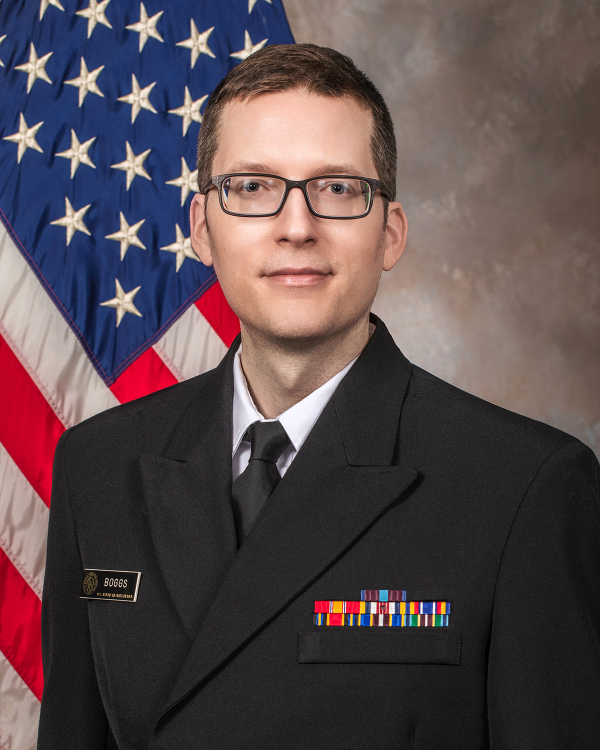
Director: CDR Nathan Boggs, MD, Ph.D.
Dr. Boggs is the allergy and immunology division director and an associate professor of medicine. He obtained a Ph.D. degree in plant molecular biology at Cornell University, medical degree at USU, completed internal medicine residency at Yale-New Haven Hospital, and allergy and immunology fellowship at the National Institutes of Allergy and Infectious Diseases. Dr. Boggs leads Walter Reed National Military Medical Center's American Initiative in Mast Cell Diseases Center of Excellence. He is the site principal investigator for three clinical trials (NCT05186753, NCT06915766, and NCT04655118). Dr. Boggs is working to expand the Allergy and Immunology Division and Department of Medicine clinical trial portfolio.
Col Karla Elizabeth Adams, MD
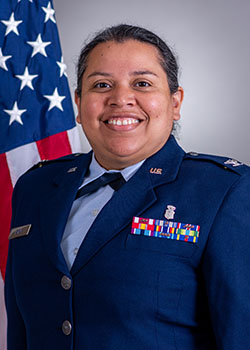
Col Karla Elizabeth Adams, MD
Dr. Adams is a professor of pediatrics and a practicing allergist in San Antonio, Texas. She is currently the program director for the allergy and immunology fellowship at Wilford Hall Ambulatory Surgical Center. She obtained a medical degree from USU and then completed pediatrics residency and an allergy and immunology fellowship at the San Antonio Uniformed Services Health Education Consortium. She is board certified in pediatrics and allergy and immunology. Her academic interests include allergic disease across the lifespan, vaccine safety and immunization in special populations, insect sting allergy, and graduate medical education. Dr. Adams is actively involved in national professional organizations, where she contributes to clinical guideline development, educational programming, and mentorship. Her work focuses on translating evidence into clinical practice while training the next generation of physician-leaders.
Yasmeen Benamar

Yasmeen Benamar
Yasmeen is a clinical research coordinator who has worked in pediatrics, psychiatry, gastroenterology, infectious disease, and allergy and immunology research across universities, private practices, and hospitals. She is an Association of Clinical Research Professionals certified clinical research coordinator and holds a Bachelor of Science in psychology from Penn State University. Throughout her career, she has handled observational studies and interventional trials, including sponsor and investigator-initiated research.
Lauren Chapman, RN
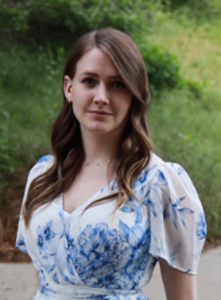
Lauren Chapman, RN
Lauren is a clinical nurse specialist. Bringing four years of experience from bone marrow transplants and hematology, along with a background in clinical research, she works closely with patients and investigators to further research in the immuno-compromised population. Beginning at Huntsman Cancer Institute in Utah and moving to Baltimore to work at Johns Hopkins Hospital, Lauren is dedicated to studying how to decrease mortality in those with secondary immunodeficiencies. She is also a graduate student, working toward a master's degree in microbiology and immunology.
Erryne Pearl Enriquez, RN
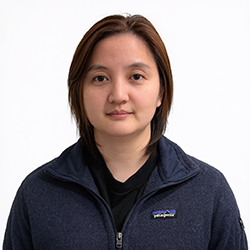
Erryne Pearl Enriquez, RN
Erryne is a research nurse manager, bringing nine years of oncology nursing experience to her work in mast cell disorders and secondary immunodeficiencies. She plays a key role in coordinating and executing industry-sponsored clinical trials, overseeing protocol implementation, patient enrollment, regulatory compliance, and ensuring clinical data integrity. She collaborates closely with physician investigators and multidisciplinary teams to advance high-quality, patient-centered research. She is currently pursuing a Master of Science in nursing with a concentration in nurse executive leadership. With this she hopes to focus on clinical operations, research excellence, and program development.
Maria Leondaridis, Research Associate
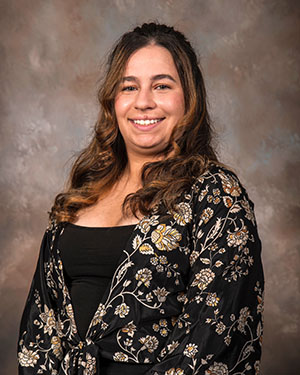
Maria Leondaridis, Research Associate
Maria is a graduate student in the laboratory of Dr. Snow in collaboration with Dr. Boggs to better understand how mutated KIT proteins differentially affect downstream signaling programs. Maria developed a novel 293T transfection assay to assess the function of expressed KIT variants in well-differentiated systemic mastocytosis through KIT autophosphorylation signaling. The goal of this work is to understand how KIT mutations result in specific downstream signaling programs and determine their pathogenicity via functional testing. She plans to dissect how these programs connect to a variety of clinical phenotypes including systemic mastocytosis, gastrointestinal stromal tumors, and pediatric cutaneous mastocytosis. Additionally, she has started a tryptase genotyping project to help unravel the potential role of tryptase in chronic spontaneous urticaria.
Emily McIntyre, Research Assistant

Emily McIntyre, Research Assistant
MAJ Jeremy McMurray, MD
MAJ Jeremy McMurray, MD
Dr. McMurray is an assistant professor in the departments of both pediatrics and medicine. He began his military career with a commission from West Point in 2015. He then received a medical degree from USU in 2019. He completed a pediatrics residency in 2022 and an allergy and immunology fellowship in 2024 at Walter Reed National Military Medical Center. He is board-certified in both allergy and immunology and pediatrics. Dr. McMurray is currently involved in allergy and immunology clinical research focused on systemic mastocytosis and venom allergy. He serves as an associate investigator on the TL-895 clinical trial for treatment of indolent systemic mastocytosis (NCT04655118) and as a writing group member for the updated 2026 insect allergy practice parameters.
MAJ Luke Pittman, MD
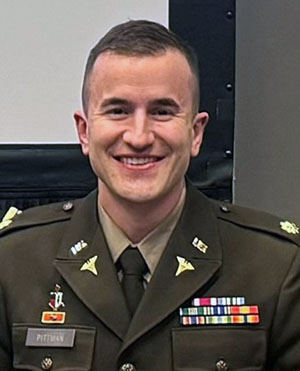
MAJ Luke Pittman, MD
Dr. Pittman is an assistant professor of medicine. He currently serves as the Program Director of the National Capital Consortium's allergy and immunology fellowship program at Walter Reed National Military Medical Center. He is also Deputy Consultant to the U.S. Surgeon General for Army allergy and immunology and the primary consulting allergist and immunologist for the White House Medical Unit. His research interests include secondary hypogammaglobulinemia, immunoglobulin replacement, allergen immunotherapy, novel targeted therapeutics, and food allergy. He currently serves as the Walter Reed site Principal Investigator for a phase III clinical trial investigating Xembify 20% subcutaneous immunoglobulin replacement versus placebo for the prevention of major bacterial infections in adult patients with hematologic malignancies, hypogammaglobulinemia, and recurrent or severe infections (NCT05645107).
MAJ Brandon Schornack, DO
MAJ Brandon Schornack, DO
Dr. Schornack is an assistant professor in pediatrics. He graduated from Michigan State University College of Osteopathic Medicine in 2016 and went on to complete a pediatrics residency at Madigan Army Medical Center in 2019 and an allergy and immunology fellowship in 2024 at Walter Reed National Military Medical Center. He is board-certified in both allergy and immunology and pediatrics. Dr. Schornack is currently involved in clinical allergy and immunology research with a focus on inborn errors of immunity, mastocytosis, urticaria, and food allergies.
Andrew Snow, Ph.D.

Andrew Snow, Ph.D.
Dr. Snow is a professor in the Department of Pharmacology & Molecular Therapeutics. His current research program focuses on how genetic and molecular aberrations in antigen receptor signaling pathways contribute to changes in lymphocyte survival, differentiation and function, informed by human monogenic disorders associated with immune dysregulation and/or immunodeficiency. His laboratory has discovered and extensively characterized many gain- and loss-of-function mutations in the lymphocyte scaffolding molecule CARD11, which give rise to selective B cell lymphoproliferation or severe atopic disease, respectively, in human patients. He is investigating how aberrations in signaling, metabolic, and cell death pathways in B and T cell lymphocytes manifest in immune dysregulation, with the goal of developing therapeutic strategies that rebalance and optimize adaptive immune responses. His lab also works closely with Dr. Boggs’ team to advance mechanistic studies on Military Health System patients with undiagnosed inborn errors of immunity and/or adverse allergic responses related to mastocytosis.
Publications
Schornack BJ, McMurray JC, Leondaridis M, et al. Well-differentiated systemic mastocytosis: Genetics, mast cell immunophenotypes, and KIT autophosphorylation. J Allergy Clin Immunol. 2025;156(6):1656-1668.e12. doi:10.1016/j.jaci.2025.07.029
McMurray JC, Schornack BJ, Adams KE, et al. Fire ant-venom anaphylaxis prevalence in the general population and patients with systemic mastocytosis. Front Allergy. 2025;6:1570123. Published 2025 Mar 31. doi:10.3389/falgy.2025.1570123
McMurray JC, Pacheco CS, Schornack BJ, et al. Standardized indolent systemic mastocytosis evaluations across a health care system: implications for screening accuracy. Blood. 2024;144(4):408-419. doi:10.1182/blood.2023023347
Waters AM, Park HJ, Weskamp AL, et al. Elevated Basal Serum Tryptase: Disease Distribution and Variability in a Regional Health System. J Allergy Clin Immunol Pract. 2022;10(9):2424-2435.e5. doi:10.1016/j.jaip.2021.12.031
Bauman BM, Stinson JR, Kallarakal MA, et al. Dominant interfering CARD11 variants disrupt JNK signaling to promote GATA3 expression in T cells. J Exp Med. 2025;222(6):e20240272. doi:10.1084/jem.20240272
Diaz-Cabrera NM, Bauman BM, Iro MA, et al. Management of Atopy with Dupilumab and Omalizumab in CADINS Disease. J Clin Immunol. 2024;44(2):48. Published 2024 Jan 17. doi:10.1007/s10875-023-01636-y
Vaseghi-Shanjani M, Snow AL, Margolis DJ, et al. Atopy as Immune Dysregulation: Offender Genes and Targets. J Allergy Clin Immunol Pract. 2022;10(7):1737-1756. doi:10.1016/j.jaip.2022.04.001
Alix V, Abdul Raheem J, Gabreski L, Adams K. Winged hymenoptera: Discordance between In vitro and In vivo sensitization. Allergy Asthma Proc. 2026;47(1):17-24. doi:10.2500/aap.2026.47.250080
Hatcher VR, Caballero MY, Schuldt MM, Adams KE. Got milk? Enzyme-linked immunosorbent assay analysis of casein proteins in methylprednisolone. Allergy Asthma Proc. 2025;46(5):431-437. doi:10.2500/aap.2025.46.250047
Adams K, Greenhawt M, Bingemann T, et al. Insect Allergy: Barriers in Training and Practice-A Work Group Report of the AAAAI Anaphylaxis Committee. J Allergy Clin Immunol Pract. 2025;13(3):501-510. doi:10.1016/j.jaip.2024.12.037